
Choosing a treatment system for a property without access to municipal sewer is rarely simple. It sits at the intersection of code compliance, site conditions, budget, maintenance discipline, and long-term reliability. The Norweco Singulair Green often enters the conversation when a conventional gravity septic system is not the best fit, or when a site needs a more advanced level of treatment. On paper, that can sound straightforward. In practice, installation decisions are shaped by details that do not always show up in the brochure.
I have seen property owners focus almost entirely on tank size or upfront price, only to learn later that the real variables were power availability, discharge options, groundwater conditions, or local service support. Those details matter more than most people expect. A treatment unit can be well engineered and still perform poorly if it is installed on the wrong site, with the wrong expectations, or without a realistic maintenance plan.
If you are evaluating a norweco singulair green system, the right approach is to slow down and examine the whole picture before the excavator arrives.
What the system is meant to do
The Singulair Green is part of the class of aerobic treatment systems designed to produce a higher quality effluent than a basic septic tank alone. That difference is often important on difficult lots, environmentally sensitive areas, waterfront properties, or sites where local regulations require advanced treatment before dispersal or discharge.
A conventional septic system relies heavily on settling and anaerobic digestion in the tank, followed by treatment in the soil. An aerobic system introduces air into the process, supporting bacteria that break down waste more aggressively. In broad terms, that usually means cleaner effluent leaving the treatment unit, which can open up options where a standard setup would struggle or fail to gain approval.
That said, "advanced treatment" does not mean "install it anywhere and forget about it." Aerobic units are more mechanical, more dependent on power, and less forgiving of neglect. They can be an excellent solution, but they are not passive infrastructure in the way many homeowners imagine a septic system to be.
The first question is not brand, it is site suitability
Before comparing features, start with the property. A treatment unit does not operate in isolation. It depends on the soil, the slope, the seasonal water table, available setbacks, and what local regulators allow.
Two properties on the same road can end up with very different approved designs. One lot may have enough native soil for conventional dispersal. The other may need advanced treatment and a reduced footprint. I have seen owners assume their neighbor's setup would work on their own parcel, only to find that a high water table or shallow restrictive layer changed everything.
A proper site evaluation should address how wastewater will be treated after it leaves the unit, not just what happens inside the tank. Even a high-performing aerobic unit still needs a compliant way to disperse or discharge the effluent. Depending on jurisdiction, that might mean drip irrigation, a low-pressure system, a mound, a media filter, or another approved method. The treatment unit is only one piece of the design.
This is where many installation budgets go off track. Someone prices the tank and equipment without fully pricing the downstream components. Then the permit comes back requiring additional controls, pumping capacity, alarms, dosing, or a more elaborate dispersal field. The system is still viable, but the total installed cost looks very different than expected.
Local permitting can shape the project more than the equipment itself
One of the most important realities in onsite wastewater is that approval standards are local. County health departments, state environmental agencies, and regional authorities often have their own rules about advanced treatment units, sampling requirements, service contracts, discharge limits, and operator qualifications.
In one county, a norweco singulair green installation may be routine. In another, it may trigger a specific operating permit, annual reporting, or mandatory service visits at defined intervals. Neither approach is unusual. It simply reflects how seriously regulators view treated wastewater on smaller sites.
Ask early whether the unit is approved in your jurisdiction and under what conditions. Approval lists matter. So do design standards. A unit that is accepted in one state might require a separate review in another. The difference is not academic. It can affect the permit timeline, design fees, inspection steps, and the documents needed before final sign-off.
Homeowners are often surprised by how much paperwork can attach to an advanced system. That paperwork is not just bureaucracy. It usually exists because the system is expected to achieve a measurable treatment result, and regulators want assurance that it continues to do so.
Installation access is often underestimated
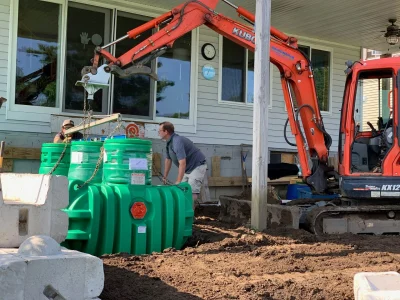
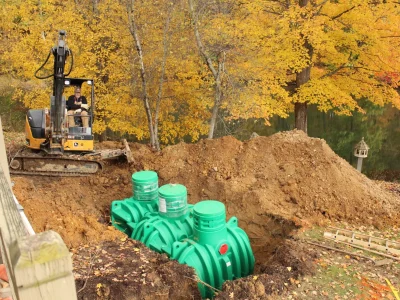
A clean design on paper can become complicated if equipment cannot reach the location easily. Tank placement, excavation depth, crane access if needed, spoils management, groundwater control during installation, and restoration all affect cost and schedule.
I have seen projects on wooded lots where the treatment area itself was acceptable, but getting materials and machinery to the location added several thousand dollars in labor and site work. Tight urban infill sites create a different challenge. There may be limited room for staging, no easy path for excavation, and strict rules about driveway or landscape norweco singulair green restoration.
The location of the unit also matters for future service. Lids, control panels, blowers, and alarms need to be accessible. Hiding everything behind hardscape or dense planting may look tidy at move-in, but it creates frustration every time the system needs inspection or repair. A treatment plant is not a decorative feature, but it also should not be buried in a way that turns routine maintenance into a half-day excavation.
Power reliability is not a side issue
A standard septic tank can continue to function mechanically during a power outage because it has very few active components. An aerobic treatment unit is different. Air delivery, controls, alarms, and pumping equipment all depend on electricity.
That does not mean power interruptions are catastrophic by definition, but it does mean you should think honestly about your local electrical reliability. Rural properties with frequent outages need a plan. If your area sees storms that knock out power for a day or two several times each year, ask what the operating implications are and whether a backup power strategy makes sense.
A standby generator may be excessive for some homes and sensible for others. The answer depends on occupancy, storage capacity in the system, how long outages usually last, and whether there is any risk of backup or treatment interruption creating a regulatory issue. For a vacation property that sits empty often, the conversation may differ from that of a full-time family residence with heavy daily water use.
Do not assume that because the unit can technically tolerate normal fluctuation, all power-related concerns are resolved. Alarms must be audible or visible enough to matter. Control components should be protected from water intrusion and electrical damage. If the property is in lightning-prone territory, surge protection is worth discussing.
Water use habits can make or break performance
Advanced treatment systems generally perform best with reasonably consistent residential loading. They do not need perfect uniformity, but they do respond to extremes.
A home with two occupants who travel half the month and then host twelve relatives for a long holiday weekend places different demands on the system than a home with four steady occupants and predictable daily use. Neither is impossible to serve, but design assumptions should match reality. Occupancy counts, bedroom counts, fixture loads, and peak demand all matter.
The more common issue, though, is not just total volume. It is hydraulic shock. If several hundred gallons hit the system in a short period because of back-to-back laundry, long showers, and a leaking toilet that went unnoticed, treatment can suffer. Aerobic units can recover, but chronic overload shortens the margin for error.
That is why installer advice about water use should be taken seriously. Spacing laundry loads, fixing leaks promptly, and avoiding unusual surges are not fussy recommendations. They are part of how the system stays in its intended operating range.
Maintenance is not optional, and that should be priced from day one
A system like the norweco singulair green should be approached as maintained equipment, not just buried infrastructure. That distinction is one of the biggest mindset shifts for homeowners moving from a conventional septic setup.
Yes, every septic system requires some maintenance. The difference here is frequency and specificity. Aerobic systems usually involve mechanical components, inspection points, and periodic service tasks that cannot be reduced to "pump it someday when you remember."
Typical ongoing obligations may include:
- Scheduled inspections by a qualified provider Aeration or mechanical component checks Sludge and scum evaluation, with pumping as needed Alarm and control verification Effluent quality or disinfection checks where required by code
The exact schedule depends on jurisdiction, design, and usage, but the broader point is simple. If your budget only covers installation and not ongoing service, you do not yet have a full budget.
This is where candid conversations save headaches. Ask local service companies what annual maintenance typically costs in your area. Ask how quickly they respond to alarm calls. Ask whether replacement parts are readily stocked. A system with excellent engineering still becomes a burden if qualified service is scarce within a reasonable distance.
Service support should be verified before you commit
A treatment unit is only as practical as the support network behind it. This matters more in rural markets and edge-of-service territories, where installers may be willing to sell a unit but routine maintenance may come from a different provider, or not be readily available at all.
I encourage property owners to identify who will actually service the system after startup. Not in theory, but specifically. Names, phone numbers, service areas, response times. If you cannot get clear answers, press harder before signing the contract.
One owner I worked with had chosen an advanced unit because it fit the site perfectly. The design was sound. The installation went well. Six months later, a relatively small service issue dragged out because the nearest qualified technician covered several counties and scheduled nonemergency calls two or three weeks out. The system was not defective. The service logistics were.
For many buyers, the best system is not the one with the most sophisticated literature. It is the one that local installers know well, local regulators are comfortable with, and local service providers can support without delay.
Do not treat the dispersal component as an afterthought
People naturally focus on the treatment unit because it is the branded product in the middle of the discussion. But the final outcome depends just as much on what happens downstream.
If the site requires drip dispersal, pressure dosing, shallow placement, or another specialized method, those elements need thoughtful design and quality installation. A strong treatment unit cannot compensate for poor field construction, improper elevations, bad control setup, or lines laid in unsuitable soil conditions.
This is especially important on sloped sites and lots with tight grading constraints. Elevation control is not glamorous, but it is decisive. A few inches can be the difference between proper flow and chronic nuisance issues. On sites with seasonal saturation, preserving the approved construction conditions is also critical. Installing when soils are smeared, compacted, or too wet can create problems that do not show norweco singulair green up until months later.
Think carefully about chemicals, cleaners, and household habits
Owners often ask whether they need special products. The better question is whether they can avoid harmful ones. Biological treatment systems do not require miracle additives, but they do benefit from common sense.
Harsh solvent dumping, paint waste, large bleach doses, antibacterial overuse, and excessive garbage disposal loading are all poor fits for any onsite system. Aerobic systems can be resilient, but they are still living treatment environments. If the household routinely sends disruptive materials down the drain, treatment consistency can suffer.
This point becomes more important in homes with short-term rentals, guest suites, or changing occupants. A family that understands the system may use it responsibly. A rotating stream of guests will not. If the property is a rental, plan for stronger education and simpler house rules. A one-page guide near the kitchen sink often prevents more trouble than a complicated owner manual stored in a drawer.
Upfront cost versus life-cycle cost
It is tempting to compare bids by the installed price alone. That is understandable, but it rarely gives the full answer. The more useful comparison looks at total cost over time: installation, service, pumping, electricity, replacement parts, permit renewals if applicable, and likely longevity of mechanical components.
An advanced treatment system may cost more at the front end than a conventional septic system. Sometimes there is no practical alternative, because the site or code will not allow a basic gravity design. In other cases, both are technically possible, and the advanced system is chosen for environmental performance or footprint reasons.
Neither choice is automatically better in all cases. The question is whether the added complexity buys something meaningful on your property. On a constrained lot, the answer is often yes. On a simple rural parcel with excellent soils and abundant area, a conventional design may still be the more economical and lower-maintenance path.
Owners usually make better decisions when they ask for a five-year and ten-year ownership view rather than a single installation number.
Questions worth asking before you sign
A short list of direct questions can reveal whether the proposal in front of you is mature or still missing pieces.
- Is this exact system configuration approved by the local authority for my site conditions? Who will perform the ongoing service, and what does a typical annual cost range look like? What happens during a power outage, and what backup strategy, if any, is recommended? What dispersal method is paired with the unit, and why is it suitable for this lot? Which components are considered routine replacement items over the first ten years?
Those questions sound basic, but they flush out assumptions fast. Vague answers are useful answers. They tell you where more design work or more contractor clarity is needed.
Installation quality matters as much as equipment quality
A premium unit installed poorly will still underperform. That is not unique to Norweco. It is true across the industry. Tank leveling, watertight connections, electrical workmanship, venting details, riser placement, alarm setup, and startup procedures all influence how smoothly the first year goes.
I pay close attention to how contractors talk about commissioning. If startup is treated as a box to check, that concerns me. Initial settings, verification, and owner handoff matter. A good installer explains what normal operation looks like, what warning signs to watch for, where the shutoffs and alarms are, and when the first service visit should occur.
Documentation matters too. You should finish the project with an as-built layout, permit records, manufacturer materials, service contact information, and clear notes on what not to flush or drain. Years later, that paperwork becomes valuable when troubleshooting, remodeling, selling the property, or locating buried components without guesswork.
Resale and ownership transfer deserve some thought
If you plan to sell the property within a few years, an advanced treatment system can either reassure buyers or intimidate them, depending on how well the system is documented and maintained. A clean service history, accessible records, and a straightforward explanation of operating costs go a long way.
The opposite is also true. If the system has been neglected, if alarms have been ignored, or if nobody can explain the maintenance obligations, buyers may assume the worst. In some markets, lenders, inspectors, or local authorities will also look closely at advanced wastewater systems during a sale.
That is one more reason to approach installation as the beginning of an ownership program, not the end of a construction job.
When the Singulair Green makes strong sense
The norweco singulair green can be a sensible choice when site limitations call for better effluent quality, when local rules favor advanced treatment, or when a property owner is willing to maintain a more active system in exchange for design flexibility. It can also be a good fit where environmental sensitivity is a real concern and the project benefits from a higher-performing treatment train.
Where owners get into trouble is not usually the decision to use advanced treatment. It is the assumption that advanced treatment removes the need for careful planning. In reality, it raises the value of planning. The better the site work, design coordination, installation quality, and service support, the better the long-term experience tends to be.
The smartest installations are usually the least dramatic ones. The permit path is clear. The installer has done similar projects locally. The service provider is known. The owner understands the operating basics. The downstream dispersal method fits the lot. Nothing about that is flashy, but that is exactly the point. Wastewater systems should be boring once they are in the ground and running properly.
If you are still in the decision phase, resist the urge to chase the quickest quote or the most confident sales pitch. Take the time to verify approval status, service support, total ownership cost, and actual site compatibility. That extra diligence before installation is often what separates a dependable system from an expensive lesson.
Excavating New Jersey LLC
406 County Rd 565, Wantage, NJ 07461, United States
+1 973-791-4284
FAQ About norweco singulair green
How much does a NORWECO septic system cost?
The installed cost depends on the selected unit, engineering, site access, excavation, electrical work, disposal-field design and required approvals. A tank-only price is not a complete installation quote. Ask Excavating New Jersey LLC for a site-specific, itemized estimate that also explains ongoing service costs.
How does a Norweco septic system work?
The Singulair Green uses pretreatment, aeration, clarification and filtration to treat domestic wastewater. In the aeration chamber, oxygen supports bacteria that break down organic material. The Bio-Kinetic unit provides further filtration and flow equalization. Final effluent disposal must follow the property's approved design and applicable requirements.
What is the average lifespan of a septic system?
There is no guaranteed lifespan for every system. Design, installation, soil conditions, wastewater loading and regular maintenance all matter, and mechanical parts may need replacement before the tank. For a Singulair Green system, follow the manufacturer's service schedule and have a qualified provider assess its condition and pumping needs.